Wednesday, December 9, 2015

Fast v. Binge


Going into the media binge, I thought it would be relatively easy to simply be on social media as often as possible. Initially, I believed that, if anything, I'd just be more informed on some topics I may have not known about beforehand or that I'd just be stalking various profiles of friends and classmates from high school.

However, the reality was much much different than I originally envisioned.

First, I would check all of my social media sites including Vine, Facebook, Snapchat, Instagram and Tumblr. With sites like Snapchat and Instagram, new content to keep me entertained ran out quickly, and after awhile I noticed that despite which site I was on I'd run into older posts I'd already seen before a day--or even a few days--prior to the binge. This got old pretty fast and after a period of time I was bored with the mindless scrolling.

Image result for technology addicted gif
 
After I checked social media, I'd try to spend time on other sites like the Chicago Tribune online or IMDb. The same problem came up that after however long, I just couldn't focus on what I was reading or seeing anymore. The content of what I was reading could've been incredibly interesting, like the multiple opinion articles on the current political controversy surrounding Rahm Emanuel, but my mind just couldn't take in anymore information (also, and this was just a small observation, my eyes started to kill me after the first day of the binge).

On the plus side, I was able to learn a great deal about the Laquan McDonald slaying and felt genuinely informed on the topic. Prior to the binge, I knew that McDonald, a 17 year old boy, had been murdered by a police officer and that the killing had been captured on a police dashcam. However, I didn't know that not only was the video made available to the public after withholding it for a year, but that the video's contents revealed the officer had shot the teenager a total of 16 times. Not only that, but other officers had been present at the crime scene and none tried to stop the cop from firing after McDonald fell, nor did any intervene to help the young man. If nothing else, because of my voracious readings on the controversy, I feel confidently knowledgeable on the topic.
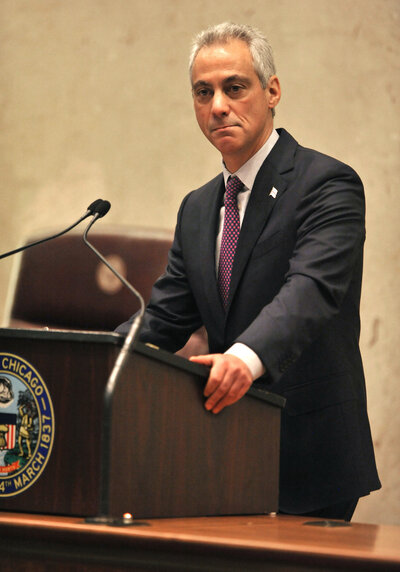
Chicago Mayor Rahm Emanuel speaks during a special City Council meeting Wednesday in Chicago. Emanuel called the meeting to discuss a police abuse scandal and apologized for the 2014 shooting of a black teenager.
Rahm Emanuel addressing the public in response to the Laquan McDonald slaying

In terms of the fast, I personally preferred it to the binge. I felt infinitely more productive when I had free time to either relax, read, work on homework or hang out with friends as opposed to just mindlessly scrolling through my phone. For instance, I noticed that I finished homework much quicker when I wasn't taking breaks to look on my phone or browse on my computer.

The one test that did feel a little strange was not having my phone on me 24/7. Usually, I always keep my phone in my pocket or purse, especially when I'm walking to class because I always listen to music as I go. It felt a little funky not having with me, making me wonder if anyone was trying to reach me and couldn't or something else along those lines. Also, I had some friends ask me if I was okay since they noticed I wasn't messaging them or snapchatting or anything like that for a few days. They took my not being connected as my being perhaps upset or sad, sort of like they thought I was isolating myself which was definitely an unforeseen side effect of the fast.
Image result for technology addicted gif
 
In all, the exercise proved to be more enlightening and interesting than I initially gave it credit for. I think it can be an eyeopening experience, highlighting the importance of balance in our technologically saturated world of today.

Tuesday, December 8, 2015

Media Binge VS. Media Fast


     The media binge was first and I was unaware of how terrible that would be. At first I thought it would be a piece of cake. I love my phone and I love social media. When I woke up in the morning I checked Twitter while laying in bed. Then after catching up on all news from while I was sleeping, I switched over to Instagram, then Sinstagram, and then Snapchat. As I got ready for class, I played YouTube on my phone to listen to music. Then I found a song I liked on YouTube and added it to my online Spotify playlist.

     By the time I was ready to leave my dorm room I grabbed my phone and texted on the way to the elevator. When I got in the elevator there was already someone in there. So to avoid conversation or awkward eye contact I got back on Twitter until we got to the first floor. Then walking to classes I listened to music on Spotify and refreshed all my social medias over, and over, and over.

     After being on a media binge, I didn't want to get onto Twitter or Instagram again! I saw the same insta pics about 100 times from refreshing and going through Instagram again. Twitter was even harder because after a while of being on the binge, I realized something.. I DON'T CARE. I don't care if you're bored or hungry. I don't care to see a video of you on Snapchat partying at some glow up party. I don't care to see you post about how much you love your sorority and your "big". I don't care that the VS Fashion Show is on tonight. I don't care about the song lyrics you just tweeted! The media binge made me realize how pointless social media can be at times and yet it consumes us.

     I started thinking about my social media accounts. Snapchat, Twitter, Instagram, etc. Everything that I didn't care about seeing other people tweet/post about, I tweeted/posted about. In fact, 2 weeks ago I tweeted: "I'm bored". NOBODY CARES IF IM BORED??? I posted that on Twitter just for the point of posting something on Twitter. Did I do it to get someones attention? Did I do it to rid myself of the boredom for a solid 30 seconds? Who knows. What I'm trying to get to here is that at a certain point in your life, social media gets old. This media binge really made me look at social media in a negative way.

     The media fast was easy. I already work two jobs and go to school full time. I only get on social media when I'm bored these days. Staying off Twitter was easy because of how annoying it got during the media binge. It was hard to stay of Snapchat because I like posting pictures throughout the day and I like to look at what interest other people enough to post pictures of. Instagrm was also hard. Instagram is definitely a weakness of mine and staying off of it was extremely difficult. After the media fast I think I realized how unimportant different types of social media can be, And how I didn't have them in my life for a couple of days and I've been getting more accomplished and going to bed earlier. The media fast and binge was a good thing for me to experience.                      


#HuskerHACKS


Amber Baesler & Ariel Adams
1.The proposal which explains the rhetorical situation and analysis of your intervention.
Our Commons Campaign was aimed to share with our peers the perks that come with going to school at the University of Nebraska-Lincoln. Money causes a lot of people stress, and is always on the minds of college students. As devoted students we are putting the majority of our money towards our education. What little funds that are left over should be spent wisely. So we wanted to find a way to put these deals out there for our fellow students. Many businesses in Lincoln acknowledge they are in a college town and have developed many deals for students, the problem is not many students know about them. Not many people follow “Papa John’s Lincoln” on Twitter. However if we could build a large student following and retweeted a Papa John’s discount tweet, or any business really, the reach to students would increase greatly. We decided on our three main platforms to be Facebook, Twitter, and directly via table tents on all the tables in the Union and word of mouth. We hoped that our social media platforms would gain attention from table tents in the Union, and that a University organization such as Student Involvement or a business would be interested in carrying on our social media past the class. Another way we wanted to carry on the campaign was through our hashtag #HuskerHACKS.


2. Explanation of what you did.
At the beginning of the project, quite a bit of time was used to find the specific message and form of communication that would be most successful and beneficial to the students of the University of Nebraska.  When it was decided that we wanted to help students get the best of their college experience by helping them save money with discounts, we started research right away.  We immediately informed each other with every student discount we previously knew, heard of, or came across.  After getting as many discounts as we could find, we chose the mode of communication.  We chose to communicate to the students through the most presently popular form of communication: social media.
A Facebook page was set up under the name “Husker HACKS”.  The page was set up as community information page that is open to the public.  The page’s bio included the exigence, the audience, and the purpose of the page.  Everyone that went to UNL on each of our friends lists were invited to “Like” and “Follow” the page to receive the updates and alerts on discounts for students attending the University.  Posts were made regarding discounts for students every couple of days.
A Twitter page was made under the username “HuskerHacks”.  A few dozen users were followed to get the ball rolling.  We made sure to follow other University of Nebraska related users and accounts such as the UNL 4-H account and of course, the ever so trendy UNL Problems account.  Similar to the Facebook page, posts were made close to daily about student discounts.  The hashtag #HuskerHACKS was also started to make the account easy to find not only now, but even after the common campaign project is over.  We also added trending hashtags to the Twitter posts to guide people to our page and make the posts more visible.  
Table tents were also made for all the tables in the Nebraska Union on City Campus.  A reservation was designated for a whole week to display the tents.  The table tents included the group or project name, Husker HACKS, our bio on wanting to help UNL students save money through student discounts, and the links to the Husker HACKS Facebook and Twitter pages.  The table tents were used as advertisements to bring in more likes and followers to the social media pages as well as get the project name out there.

3. Evidence of your intervention.
First starting a social media account is difficult no matter who you are. On Twitter, to find our target audience we started by just following accounts that looked like students, anyone with UNL and their major in their bio. After not very many follow backs, we went overboard and followed accounts tweeting about #LNK, #UNL, local businesses, etc.  A majority of our follows came as a response from us following first, but after we started gaining recognition, there were some new people who engaged with us first. Although we cannot say whether they followed us because of the table tents, word of mouth or the Suggested section on Twitter, they were unique follows and show that our campaign gained some attention. We also received a lot more direct messages and tweets directed toward us after the mass following of student and non-student accounts. Most were spam telling us we could buy followers, but there were a few genuine messages, saying thanks for following.  

We also were happy to have a local business tweet at us for a special they were having.

Between the two accounts we had a total of 93 followers. This number increases every day, and with the maintenance of them could become valuable and well followed Twitter pages.

4. A reflection on what went well and what you would do differently had you had to do it again.

This commons campaign project was very much a trial-and-error learning  process.  The majority of the project’s allotted time was used to find the student discounts that were to be shared with the students and little time was left for the communication process to get our message out.  The Facebook and Twitter social media pages were the main outlet of communication.  The Twitter page was more successful than the Facebook page.  This is assumed to be because of the popularity movement or trend towards Twitter.  The table tents in the Nebraska Union were used to merely lead people to the social media pages to see the discounts that were posted.  Table tents in the Union seemed to be a logical and useful way to get more followers, likes, and overall activity on our pages.  It did seem to have a little bit of an effect.  
If given another opportunity to work on this commons campaign, there would be a few changes to improve our results. Next time, we would use our schedule to split our efforts into the discount research, social media page set up, and social media page postings and alerts.  We would also make sure to find enough discounts for daily discount postings and alerts for both Facebook and Twitter.  Next time, Twitter would be made the main mode of communication due to the decline in college students’ use of Facebook.  A more effective advertising option would bring more activity to the social media pages, something more suitable than table tents, such as attention grabbing posters all around campus.  We might also try to use the “Boost” options on the posts and alerts.  This is an option through Facebook where a small fee is paid to make the post more prevalent on Facebook users news feed.  This would mean we’d be paying for more visibility but it would be interesting to see the results.

Media Fast & Binge


Going into the media binge I thought - this will be a piece of cake. I'm already on media throughout the day anyway - I was a little off. True life, I’m a binge-watcher on a normal day. So, when it came to “consciously binge” I completed a season of One Tree Hill in about 3 days – that’s about 24 episodes. This was more extensive than my usual binge watching and I almost began to feel sick, physically. I felt like I was trapped in a box – unable to move from my bed. I was in dangerous need for some light and fresh air or any interaction with people that wasn't through a screen.


My world of idia reached full capacity during these 3 days… I replied to a text-message within 5 seconds, was within the first 10 people to like every Instagram post I followed, and liked every Facebook status – even my mom’s lame, inspirational quotes. After refreshing every app about 1 million times a day I became very tired and annoyed with people – the media binge was harder than I thought. Being on media 24/7, I actually felt more disconnected from the people around me – ironic. I never looked up from my iPhone – avoiding people walking, never paying full attention in class, having to say “wait, what did you say” when my friend finished telling me her interesting story of the day. I felt unfocused and drained by the end of the days of the binge - always looking down and running my fingers at high speeds.


It came to my understanding that moderation is key – like mom and grandma always said. Honestly, I will never isolate myself from media all together, however, through the constant use of media, the nature of my experience changed. I realized although a smart phone brings convince and security, it takes away true separateness and consciousness of life around you.

Transitioning to the media fast was probably one of the most irritating and aggravating things I’ve done. The contrast was a lot to handle. I couldn’t go on Instagram and creep on people for 2 days – that was hard. Everyone whips their phones out in class, at the dining hall, during study hours – and then there is me. Looking at them wondering what is going on in the social world. Although it was very hard to control myself from not checking Snapchat, Instagram, etc I noticed how absorbed people are unconsciously.  For example, during diner my friends were on their phones roaming around on media while I was trying to have a conversation. They still seemed to interact – but not on a deep level that I expected. While I was giving my full attention while they were giving maybe 40%.


During the fast I became more involved in the personal aspects of others rather than being absorbed in myself + my interactions online. It was hard to stay away completely but the absence of media made me more productive and conscious of what I needed to accomplish for the day. I believe we’ve gotten so used to the presence of media, it’s hard to imagine life without it.

Commons Campaign Portfolio

Sawyer Kreikemeier, Dante Fisher, Clint Wilson, Rafe Parker
Jon Carter
Comm250
December 8, 2015
Commons Campaign Portfolio

 http://unlbikesafety.blogspot.com/
          
 For our group’s commons campaign, we decided to create an online blog that promoted safety regulations between bicyclists and pedestrians on campus. The exigence of our campaign was to educate the students and faculty of the University of Nebraska-Lincoln campus on the safety of pedestrians in relation to people on bicycles. We strived to think about how to promote the issue to our audience and how the issue could be changed, while thinking of ways to relate to our audience and gain their support.
           
Our target audience was the people that walk on the sidewalks of every day; the students, faculty, and administration of UNL. We created a blog to encourage discussion on the topic, and well as present information relevant to the issue. In response to our proposal, we decided that it was necessary to get the opinion of our audience on the topic in order to see how people on campus felt about the issue and what could be changed.
            
We knew from the beginning that our biggest constraint would be getting word out about our campaign, and getting people to support it. We understood that ultimately we would have to spread information about our campaign by word-of-mouth, but the only way to track support was through our blog.
            
One of the affordances we were aware of at the beginning of our project was the fact that many people on campus are aware of the need for safety between bicyclists and pedestrians. It have been noted on social media pages that people do not appreciate almost getting ran-over by someone riding a bike while walking to class, and we used that to our advantage. We also appreciated the fact that it would be easy to get a general feel of people’s opinions on the issue through a survey. Since many people on campus are familiar with the topic, they were more likely to take the minute or two to take our survey and help us as a group gather data on the issue.
            
Beginning our project, we first set out on the city campus in an attempt to find any signs that are directed to bicyclists. At the beginning of the year, two of us remembered seeing a sign near Morrill Hall that told bicyclists to keep at least three feet between them and walking pedestrians. While walking all around campus, we found no signs that appealed to the safety of pedestrians in relation to individuals on bicycles. Following that, we created our blog. The purpose of our blog was to establish an online presence and to get the word out about our campaign for bicyclist vs. pedestrian safety on campus. We made sure to include the little information that the university provides on its website about bicyclist safety, hoping that other people looking at the blog would see that more safety is needed. After creating the blog, we devised a five-question survey that we sent out to our peers across the university. The survey was open for two weeks, from Tuesday, November 17th, until Tuesday, December 1st. In the survey, we asked students and faculty if they felt bicyclists need to have more etiquette for pedestrians on campus, if they have been hit by a bicyclist, how safe they feel around bicyclists on the sidewalks, if bicyclists should yield to pedestrians or vice versa, and areas on city campus with the highest bicycle traffic. Options for the areas included Vine Street from 17th Street to Memorial Stadium, the sidewalks between Andrews Hall and Richards Hall, the Union to Brace Hall, and the sidewalks along 14th, 16th, and “R” Streets. After the survey was done, we went over the data and published it on the blog.            
          
 The blog that we created served as the medium for our project. From there we posted our group’s intentions on what we planned to accomplish with this project for our audience’s understanding. As a reflection of our exigence, we included links to the university’s website regarding the current regulations in place for people riding bikes on campus, as a way to show our audience where we started, and where to go from there. After that, we created the survey that we emailed to our classes. We asked five simple questions that were relevant to our project in hopes that they would accurately represent the opinions of UNL students and faculty about the issue of bikes on campus.
            
Several things went well in our group’s quest for pedestrian safety with bicyclists. Gathering public opinion about bicycle vs. pedestrian safety on campus went very well, as we received many responses that showed the need for bicycle safety. It was very easy to create an online survey and email it to our classes and other peers on campus, in order to gather information on how people across campus feel about the issue. Spreading the message online went very well, too. Creating a blog was a great way to provide information to UNL students about the issue of pedestrian safety in relation to bicyclists. It was easy to upload information that was provided by the university’s website, as well as start discussion about the topic and what should be done about it. Being able to put our data gathered from the survey was great as it gave students and faculty a general sense of feeling about the issue.
            
There are several things that our group could do differently in the future if we were to do the project again. It would have been helpful to have more presence both online and in person about the project. Each of us could have shared the blog on our social media sites like Facebook and Twitter, asking people to take a look at it and discuss the issue. We could have also created social media sites for our campaign, rather than just having a single blog about it. In person, we could have spoken to peers and instructors about the issue, striking up conversations across campus, which would not only get people talking about the issue but also direct them to our social media sites to get more information on what is being proposed. Our group could have reached out to the Transportation Services here at UNL, letting them know about our project and talking to them about the issue. We could have seen if they have an opinion on the issue, or if they had any plans for signage around campus or more definitive regulations for people biking on campus. All of these things could have helped solidify our campaign more and make more people aware of the issue.
          
 Even though we may not have gained as much support as we had hoped to, we still believe that our campaign could make a change to the issue. It does not matter if the university amends its regulations for bicycling on campus. If the only successful thing taken from our campaign is a few bicyclists taking safer precautions around pedestrians on campus, then our campaign succeeded.